
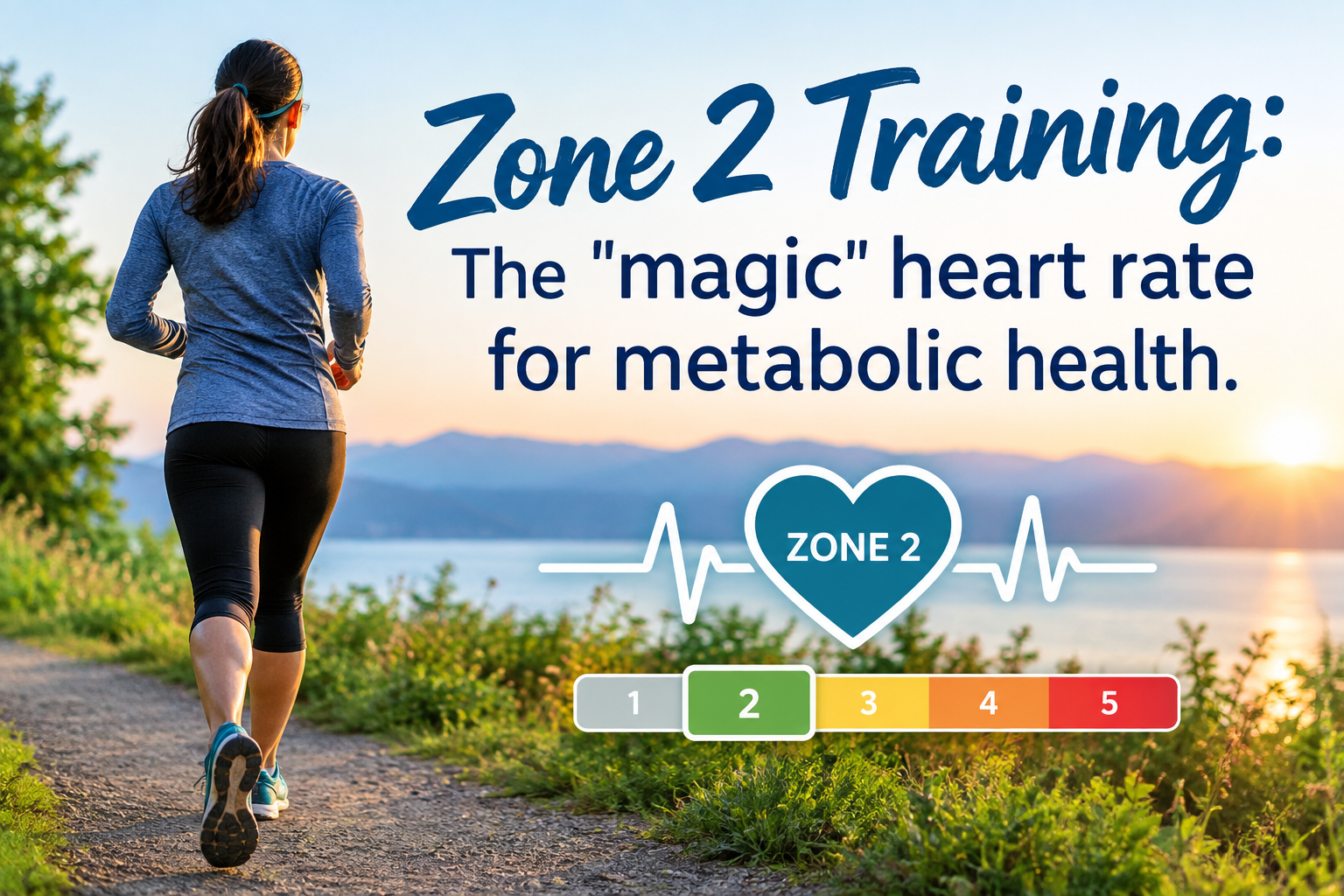
Zone 2 training is a moderate-intensity aerobic exercise performed at 60% to 70% of your maximum heart rate. This type of training builds your aerobic base and improves overall metabolic health.
What is Zone 2 Training?
- Pace and Effort: You are working hard enough to breathe deeply and strain, but you can still speak in complete sentences. A good rule of thumb is the “talk test”—if you can talk, but speaking a long sentence or reciting a paragraph becomes difficult, you are in the zone.
- Heart Rate Range: It is generally defined as 60% to 70% of your maximum heart rate, sitting right below your first ventilatory threshold (VT1) or lactate threshold.
Key Benefits of Zone 2 Training
- Mitochondrial Health: Increases the number, size, and efficiency of mitochondria (the energy powerhouses in your cells), which helps your body create and use energy better.
- Enhanced Fat Burning: Trains your body to use stored fat as its primary fuel source, sparing limited carbohydrate (glycogen) reserves for longer efforts.
- Improved Insulin Sensitivity: Regular sessions help your muscles absorb glucose more effectively, lowering the risk of chronic conditions like type 2 diabetes and heart disease.
- Improved Cardiovascular Function: Strengthens the heart muscle so it pumps more blood per beat, increases tiny blood vessels (capillaries) around muscles, and lowers resting heart rate.
- Better Metabolic Fitness: Improves insulin sensitivity, helps stabilize blood sugar levels, and builds metabolic flexibility.
- Low Injury Risk and Easy Recovery: Places minimal strain on your joints, tendons, and muscles compared to high-intensity workouts, allowing for greater consistency and faster bounce-back.
- Brain and Longevity Support: Boosts blood flow to the brain, supports long-term cognitive health, and is strongly linked to a longer health span.
How to Execute It
- Duration: Sessions should be continuous and last at least 20 to 45 minutes, aiming for around 150 total minutes per week.
- Modality: You can achieve Zone 2 through steady-state activities like brisk walking, cycling, jogging, or using an elliptical machine.
How to find your Zone 2 Heart Rate
To find your specific Zone 2 heart rate range, you can use two main methods: the Age-Based Method (simpler) or the Karvonen Formula (more precise because it includes your resting heart rate).
Method 1: The Age-Based Formula (Quick Estimate)
This method estimates your maximum heart rate and applies the 60% to 70% Zone 2 intensity.
- Calculate Maximum Heart Rate (MHR): 220 – Your Age = MHR
- Find the Lower Limit (60%): MHR x 0.60
- Find the Upper Limit (70%): MHR x 0.70
Example for a 40-year-old:
- 220 – 40 = 180 bpm (MHR)
- Zone 2 Lower Limit = 180 x 0.60 = 108 bpm
- Zone 2 Upper Limit = 180 x 0.70 = 126 bpm
Method 2: The Karvonen Formula (More Accurate)
This method factors in your Heart Rate Reserve (HRR), which accounts for your individual fitness level by using your resting heart rate.
- Find your Resting Heart Rate (RHR): Take your pulse for one minute first thing in the morning before getting out of bed.
- Calculate Maximum Heart Rate (MHR): 220 – Your Age = MHR
- Calculate Heart Rate Reserve (HRR): MHR-RHR = HRR
- Find the Lower Limit (60%): (HRR x 0.60) + HRR
- Find the Upper Limit (70%): (HRR x 0.70) + HRR
Example for a 40-year-old with an RHR of 60 bpm:
- Zone 2 Lower Limit = (120 x 0.60) + 60 = 132 bpm
- Zone 2 Upper Limit = (120 x 0.70) + 70 = 144 bpm
Comments are closed