
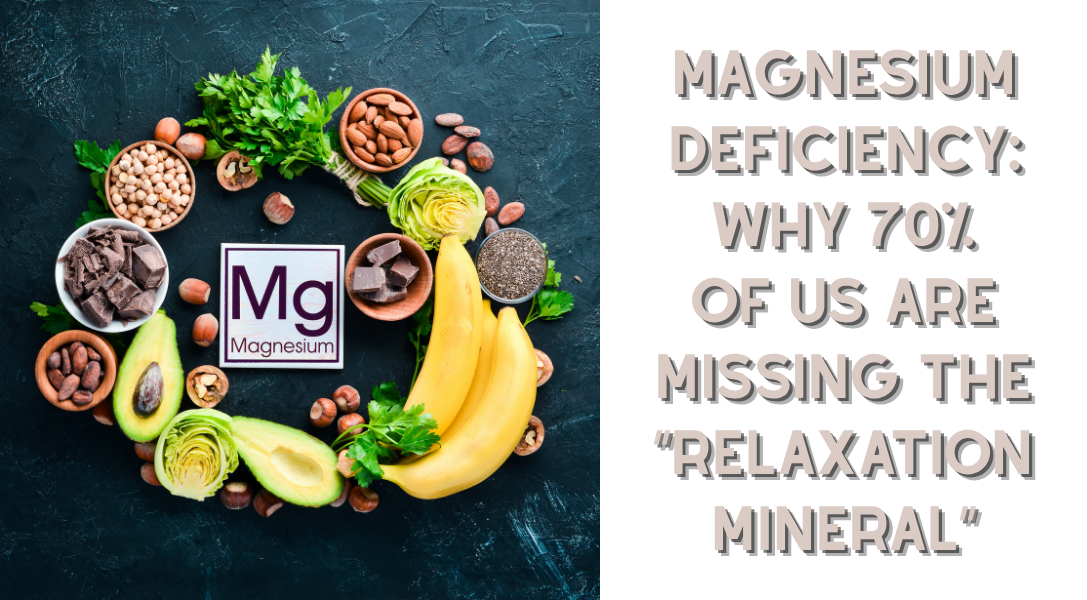
Magnesium is a critical nutrient required for over 300 biochemical reactions in the body, yet an estimated 70-80% of adults do not meet the recommended daily intake. Often dubbed the “relaxation mineral,” it serves as a natural calm switch, regulating the nervous system and helping muscles unwind. [1, 2, 3, 4]
Why Are We Deficient?
The staggering deficiency rate is largely a product of modern diets, stress, and environmental changes:
- Soil Depletion: Modern commercial farming has steadily drained minerals from the soil, meaning the food we grow inherently contains less magnesium than it did decades ago. [1, 2, 3]
- Food Processing: Refining and processing grains can strip away up to 80-85% of their natural magnesium content. Diets heavy in processed foods, white flour, and refined sugar lack this essential nutrient. [1, 2, 3]
- Stress Drain: Chronic stress causes the body to excrete more magnesium, creating a frustrating cycle. [1, 2]
- Lifestyle Culprits: High consumption of caffeine, alcohol, and sugar actively block magnesium absorption and promote mineral loss through the kidneys. [1, 2, 3]
Signs You Might Be Low
- Sleep Disturbances: Difficulty falling asleep, frequent waking, or lingering insomnia.
- Muscle Tension: Frequent cramps, spasms, or restless leg syndrome.
- Mood Fluctuations: Heightened feelings of stress, nervousness, or mild anxiety.
- Fatigue: Unexplained tiredness and low daily energy. [1, 2, 3, 4, 5]
How to Replenish Your Stores
Fortunately, refilling your body’s magnesium reserves is very achievable. Prioritizing whole, unprocessed foods and targeted supplementation can get you back on track:
1. Magnesium-Rich Foods
Focus on incorporating whole foods that naturally contain high amounts of magnesium:
Focus on incorporating whole foods that naturally contain high amounts of magnesium:
2. Smart Supplementation
If you have persistent tension or trouble sleeping, dietary changes alone might not be enough. Because there are several forms of magnesium, choosing the right one is essential to avoid unwanted digestive side effects: [1, 2, 3, 4]
If you have persistent tension or trouble sleeping, dietary changes alone might not be enough. Because there are several forms of magnesium, choosing the right one is essential to avoid unwanted digestive side effects: [1, 2, 3, 4]
The Best Absorbed (For General Health):
- Magnesium Glycinate: Highly bioavailable and gentle on the stomach. Bonded with the amino acid glycine, it has calming properties. Best for: Sleep, stress, anxiety, and sensitive digestion.
- Magnesium Citrate: One of the most popular forms, bound to citric acid. Highly absorbable but has a natural laxative effect. Best for: Constipation relief and boosting overall magnesium levels.
- Magnesium Malate: Bonded with malic acid, an acid naturally found in fruits. It is generally gentle and easy to digest. Best for: Energy production and easing muscle fatigue. [1, 2, 3, 4, 5, 6]
Targeted Use
- Magnesium L-Threonate: A salt created by combining magnesium with threonic acid, a byproduct of vitamin C. It is uniquely able to cross the blood-brain barrier. Best for: Cognitive function, memory support, and brain health.
- Magnesium Taurate: Bonded with the amino acid taurine. It is highly absorbable and has calming effects. Best for: Heart health, regulating blood pressure, and blood sugar support.
- Magnesium Orotate: Bound to orotic acid, which helps repair tissues. Best for: Cardiovascular support, athletic performance, and endurance. [1, 2, 3, 4, 5]
Niche & Poorly Absorbed Forms
- Magnesium Oxide: Contains a high amount of elemental magnesium, but it has a very low absorption rate in the gut. Best for: Treating heartburn and short-term constipation.
- Magnesium Sulfate (Epsom Salt): Best used topically (dissolved in water) rather than consumed. Best for: Soothing sore muscles and stress relief in a bath.
- Magnesium Chloride: Often used in skin sprays or oils. Best for: Topical application and easing localized muscle tension.
- Magnesium Lactate: Bonded to lactic acid; it is easily absorbed and very gentle. Best for: Fortified foods and gentle digestion for sensitive individuals.
- Magnesium Aspartate: Bound to aspartic acid. Similar to malate, it boosts energy but acts as a strong salt. Best for: Fighting chronic fatigue and muscle cramps. [1, 2, 3, 4, 5, 6, 7]
Check out the Mayo Clinic Guide to Magnesium for a deeper dive into the research, or consult the Healthline Guide to Magnesium Types for a full breakdown of the science behind each variant. [1, 2]
Disclaimer: Before starting any new supplement regimen, it is always wise to consult with your primary care provider or a registered dietitian to ensure it is appropriate for your specific health needs and medication list.
Comments are closed