
Awe is an emotion combining profound wonder, respect, and sometimes fear, usually inspired by something vast, majestic, or overwhelmingly powerful. It makes you feel captivated by greatness. [1, 2, 3]
Experiencing awe lowers cortisol, the body’s primary stress hormone. By shifting your focus outward, awe quiets the brain’s “self-critical” networks. You don’t need a massive adventure to see these benefits; simple, everyday wonder can act as a reset for your nervous system. [1, 2, 3, 4, 5, 6, 7, 8]
- Perspective Shift: Awe makes you feel smaller in a vast, beautiful world. This “small self” effect dampens the part of the brain tied to ego and personal worries. [1, 2, 3]
- Cortisol Drops: Research indicates that taking in awe-inspiring views, art, or moments can significantly reduce cortisol and calm your nervous system’s “fight or flight” response. [1, 2]
- Immune Boost: The positive physiological shift from awe increases protective proteins called cytokines, which support overall health. [1]
- Take an “Awe Walk”: An “Awe Walk” is a scientifically backed practice developed by researchers at UC Berkeley. Walk outside for 15 minutes with the sole intention of looking for things that surprise, amaze, or humble you. [1, 2, 3, 4, 5] Studies show that taking a fifteen- to twenty-minute walk in nature—without your phone—significantly reduces anxiety and lowers stress hormones. [1, 2]
- Appreciate Art: Spending just twenty minutes mindfully viewing artwork can reduce your circulating cortisol levels. [1]
- Listen to Music: Letting yourself get swept away by inspiring or moving music can trigger wonder. [1, 2]
- Notice Everyday Wonders: Awe lives in simple things, such as watching a beautiful sunset, noticing the stars, or feeling the scale of an ancient tree. [1, 2, 3]
More Simple Ways to Find Daily Awe
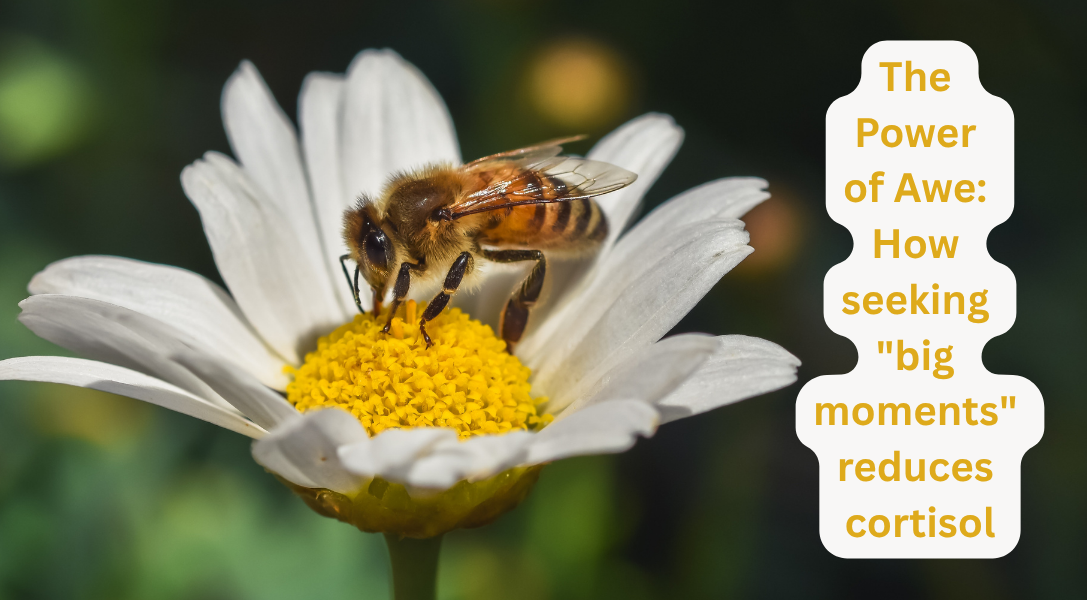
- Look at the micro-world: Watch an ant carry something heavy, or look closely at the veins on a leaf.
- Observe the sky: Spend three minutes watching clouds move or looking at the colors of a sunrise.
- Listen to “ordinary” sounds: Close your eyes and isolate the layers of sound outside, from distant traffic to birds.
- Appreciate everyday tech: Think about the invisible Wi-Fi signals or plumbing systems making your life easier right now.
- Watch a stranger’s kindness: Intentionally look for small, polite interactions between people on your commute.
- Track the passage of time: Look at an old tree or a worn doorstep and realize how much history it has witnessed. [1]
The Mental Shift Required
- Slow down: Slowing your physical pace naturally forces your brain to notice details you usually skip.
- Minimize distractions: Put away your phone for 10 minutes during a walk to remain present.
- Adopt a beginner’s mind: Pretend you are seeing a common object, like a fork or a refrigerator, for the very first time. [1, 2, 3, 4]
Put some time in your schedule today or tomorrow to experience awe and notice the benefits.
Comments are closed